President Donald Trump says there’s a “good chance” for a peace deal between Russia and Ukraine, but his negotiators have hard work ahead — they now head to the Kremlin and still need to iron out key details with Kyiv.
After what the United States described as “very productive” talks Sunday with Ukraine, special envoy Steve Witkoff was set to travel to Moscow to discuss changes that Kyiv and its allies have secured to the peace plan. Vladimir Putin signaled last week that he was ready to have a “serious” conversation, but has shown little sign of stepping away from his hardline demands that formed the basis of the original 28-point proposal backed by Trump.
The Kremlin said early Monday that the American delegation would meet with Putin on Tuesday.
Before that, Witkoff, Trump’s son-in-law Jared Kushner and Secretary of State Marco Rubio met in Florida with a delegation from Ukraine, which has been damaged by the removal of its top negotiator in a corruption scandal.
“So much work remains,” Rubio told reporters after meeting with Kyiv’s team, now led by Rustem Umerov, a senior official and former defense minister. “But today was again a very productive and useful session where I think additional progress was made,” Rubio said.
In a separate statement on Facebook, Umerov said “substantial progress” had been achieved in “advancing a dignified peace and in converging our positions with the American side.”
Neither Rubio nor Umerov gave specifics of what was discussed.
Speaking to reporters on board Air Force One late Sunday, Trump said Ukraine’s “corruption situation” amid the peace negotiations was “not helpful.” Asked if it was impeding talks, he said there was a “good chance we could make a deal.”
President Volodymyr Zelenskyy called the talks “very constructive” in a post on X on Monday, but added: “There are some tough issues that still have to be worked through.”

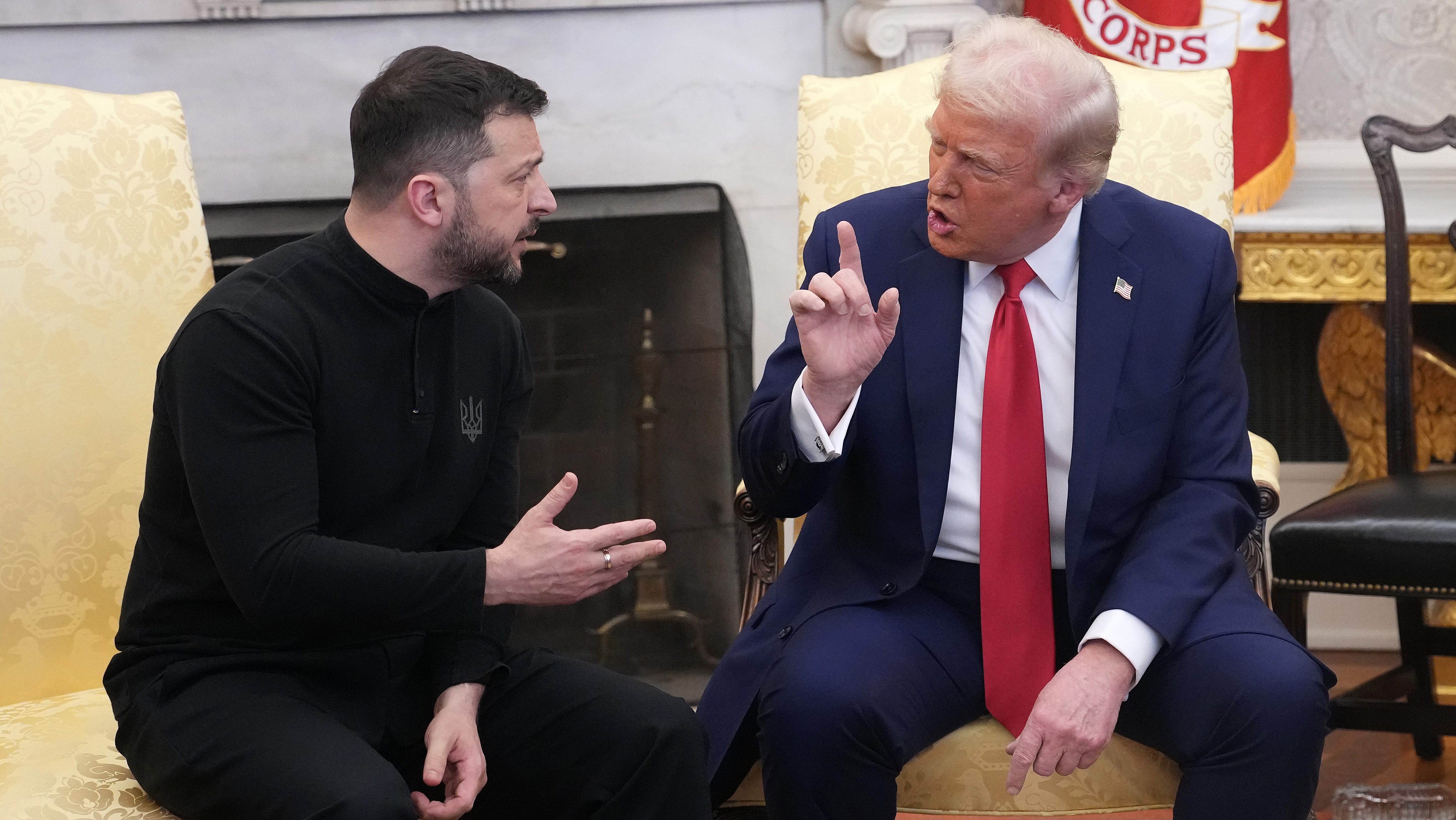

He was on a diplomatic offensive in Europe, meeting Monday with French President Emmanuel Macron.
It could be a pivotal week for diplomacy, said Kaja Kallas, the European Union’s foreign affairs chief.
“It is clear that Russia does not want peace, and therefore we need to make Ukraine as strong as possible in order then to be ready to stand up for themselves in this very, very difficult time,” Kallas told reporters Monday.
The talks in Florida follow last weekend’s agreements in Geneva, where Trump’s original 28-point peace plan to end the war was modified to make it more palatable to Ukraine and its backers in Europe.
It was initially widely seen as catering to Moscow’s demands, without forcing it make any substantial concessions.
Putin said last week he had received this version and it could serve as a framework for a final peace deal. However, Putin also indicated that he was not keen to negotiate with the current “illegitimate” Ukrainian government.
He also said fighting would only stop when Ukrainian troops withdraw from the territories they hold, showing little sign of compromise on the core issue of Ukrainian territorial concessions centered on the eastern Donbas region.
“If they don’t withdraw, we will achieve this by force,” Putin said.

Want more insights? Join Working Title - our career elevating newsletter and get the future of work delivered weekly.
