A transgender former shelter resident is suing New York, saying city shelters failed to place her in a shelter for women or transgender people, putting her at risk of assault on multiple occasions. Advocates say she is not alone.
Content warning: This story includes descriptions of sexual assault. If you need support, contact RAINN’s hotline.
Jane Doe moved from Florida to New York City in 2020 because of its reputation as a safe city for transgender people.
But when she lost her home in the summer of 2022 and entered a homeless shelter, the city repeatedly failed to place her in a shelter that conformed with her gender identity, a lawsuit from Housing Works, Brooklyn Legal Services and Wang Hecker LLP alleges.
During a two and a half year stay across three city shelters, Doe says shelter staff ignored her requests to be placed in a room with women or in a bed specifically for transgender people. Shelter staff repeatedly placed Doe in rooms with men, her lawyers say, putting her at risk of violence and predation.
Doe was sexually assaulted multiple times by other shelter residents during that period, the lawsuit filed in late October says.
“In the face of a national backlash against trans folks, with the right using transgender folks as a whipping post to whip up a base of prejudice among its base, it was so essential to be in a city that held itself out as a haven,” said Doe’s lawyer Armen Merjian of Housing Works. “It is all the more disappointing and angering to know that in the face of that she has gone through such trans discrimination in our system.”
(function(d,u,ac){var s=d.createElement(‘script’);s.type=’text/javascript’;s.src=’https://a.omappapi.com/app/js/api.min.js’;s.async=true;s.dataset.user=u;s.dataset.campaign=ac;d.getElementsByTagName(‘head’)[0].appendChild(s);})(document,54625,’u4kmqsczew4vunxutxmd’);
The ordeal deeply wounded and hurt Doe, who is a Black transgender woman. She received permission from a Supreme Court of New York Judge to proceed anonymously in her case to protect her identity and her safety. Her name is also withheld in this story.
The City Law Department declined to comment on the suit.
In a statement, a spokesperson for the Department of Homeless Services (DHS) said, “While we cannot comment on the specifics of ongoing litigation, we will conduct a thorough investigation to verify the facts, and should we identify any violation of agency policy or staff misconduct, we will hold any and all bad actors accountable.”
The suit alleges that employees of DHS and three city-contracted shelter operators failed “to place her in a safe, secure housing accommodation because she is a transgender woman,” in violation of city human rights laws that protect gender identity and disability.
Doe says in the suit that despite informing multiple staff across shelters about her identity, requesting multiple transfers, and complaining to high-level staff at the city’s Department of Social Services, she was continually misgendered and mistreated.
The suit says she was misinformed about her rights to a gender-consistent bed, placed in facilities that endangered her safety, and retaliated against her for being transgender, jeopardizing her ability to secure permanent housing.
“For everyone that comes forward to me that’s a homeless person suffering something, or a person who is trans and Black and poor and discriminated against, they’re always the tip of the iceberg,” said Merjian.
A ‘beacon’ for transgender people
New York City has, in some ways, been on the cutting edge of policymaking to protect transgender people. But realizing those promises hasn’t always come easy.
Transgender people in the United States experience disproportionate violence compared to cisgender people. In 2019, the American Medical Association recognized it as “an epidemic.”
They are also twice as likely to experience homelessness, according to the Trevor Project. While there is limited data on the prevalence of homelessness and violence on transgender people by race, what researchers do know suggests that Black transgender women like Doe are at the greatest risk of predation.
“To see her be able to articulate the dignity that was stripped from her, the safety and the ability to safely come into her identity and in a city that she expected safety from. It’s heartbreaking,” said Julian Castronovo, a supervising attorney at Brooklyn Legal Services who works in the LGBTQ+ and HIV advocacy unit and also represents Doe.
In 2006, New York City’s DHS put out a first of its kind policy for serving LGBTQ+ New Yorkers, asking providers to assign people to the intake shelters that match their gender identity.
Then, in 2021, the city reached a settlement in Lopez v. NYC Department of Homeless Services, a landmark case that argued the city failed to protect the safety of transgender people in shelters.
The settlement required the city to establish shelter beds to specifically serve trans, nonbinary, and gender nonconforming (TGNC) people. DHS had designated a minimum of 40 units for gender nonconforming clients in five shelters as of earlier this year.
In part due to the Lopez settlement, New York then opened the nation’s first publicly funded homeless shelter for trans people at Ace’s Place earlier this year, with 150 beds specifically set aside for transgender and gender non-conforming clients, bringing the total to 190. In a press release championing the announcement, the department wrote: “the city stands as a beacon of safety, dignity, and empowerment for TGNC community members navigating housing insecurity.”
In a statement to City Limits, a DHS spokesperson added: “We recognize that a safe and affirming environment is absolutely critical to the health and stability of vulnerable New Yorkers looking to get back on their feet in shelter, which is why the agency has taken important steps to strengthen systemwide protections for LGBTQI+ individuals while ensuring trauma-informed service delivery across our network of not-for-profit providers that operate shelters.”
DHS doesn’t report an exact number of transgender people it serves in its shelters, but reports indicate they served 362 LGBTQ people in its shelters from April through June of this year, with 123 specialty beds available for LGBTQ people.
In addition, the agency says it has implemented comprehensive training for DHS and provider staff on serving transgender and gender non-conforming clients. That includes annual reminders and updates to their policies and systems—like changing forms, data systems, and records to match a client’s preferred name and gender identity.
During that period where the city was rolling out new policies and planning trans-specific shelters, Doe says workers at DHS intake centers and individual shelters routinely discriminated against her, in direct violation of those policies and civil rights and disability rights law. Higher ups who knew about it did not hold those workers accountable, the suit alleges.
“There are policies on the books that say that what happened to Ms. Doe shouldn’t happen,” said Castronovo.
DHS’s policy on placing transgender-identifying individuals entitles them to a placement consistent with their gender identity, expedited placement upon request, a waitlist for TGNC beds, rights to transfer for safety, and other reasonable accommodations, like beds in single occupancy rooms, smaller rooms, or rooms with locking bathroom doors, as available.
But ensuring those policies make it into practice is another matter, advocates say.
“New York has made important progress, but leadership on paper doesn’t always translate to lived safety for Trans people,” said Sean Ebony Coleman, the founder of Destination Tomorrow, which operates Ace’s Place, in a written statement to City Limits. “The experiences described by many Trans individuals living in New York City reflect what our community has been saying for years: discrimination, misgendering and unsafe conditions remain far too common.”
‘Not trans enough’
When Doe lost her apartment in summer 2022, she did what many New Yorkers do when they need help: she called 311. Relatively new to New York, recently out as trans, and now losing her home, Doe was particularly vulnerable.
“It was scary, because I don’t have any family here, so I had to enter the shelter system,” she said in a written response to questions from City Limits.
DHS intake facilities for single adults are gender-segregated. Men go to a shelter on 30th street in Manhattan. Women go to one of two intake facilities in the Bronx and Brooklyn.
When Doe told the 311 dispatcher that she was a transgender woman, Doe says she was told to go to the men’s intake shelter. Doe says the dispatcher told her that in order to be able to go to a women’s intake shelter, she had to be on Hormone Replacement Therapy for at least one year.
Hormone Replacement Therapy, or HRT, is a treatment that some transgender people undergo to replace or suppress the hormones that their body makes. One need not be on HRT to be transgender. Some cannot get HRT because of its high cost and systemic barriers to its use in many states.
As instructed, Doe went to the men’s intake shelter. There, she said that she repeated that she identifies as a transgender woman during her intake interview and requested a placement in a bed specifically for transgender people or in a women’s shelter. The intake interviewer said that she needed to be on HRT for at least one year.
“She was told that she’s not trans enough. She needs to be more trans by going on hormones, and then she was placed in a men’s shelter,” said Castronovo.
DHS said that it makes appropriate placements based on the client’s gender identity and also considers special accommodations clients need in making placements. The agency declined to comment on the specific circumstances of Doe’s placement, citing the pending litigation.
“There is to our understanding, no such requirement,” said Merjian of the idea that people must be on HRT in order to secure certain shelter placements. “We can only imagine that our client could not have been the only person at several different locations in the homeless system to be so informed.”
DHS confirmed that being on HRT is not and has never been a requirement. The agency said it relies solely on self-reported gender identity to make placements.
Doe was not able to begin HRT until 2023 because she lacked access to a provider, the lawsuit states. It argues the denial of Doe’s gender identity during placement exposed her to risk of assault and constitutes differential treatment, a violation of DHS’ transgender policy and discrimination under the law.
Violence against transgender people is two and a half times higher than against cisgender people in the United States, according to Everytown for Gun Safety.
“That act of coming out to the public is incredibly emotionally vulnerable, but it also incites violence,” said Castronovo.
Sexual assault in shelters
Doe’s lawsuit describes multiple horrific assaults, callous shelter staff, and insufficient response from higher-ups at DHS across two-plus years in shelter.
“You don’t know what’s going to happen to you on a day-to-day basis,” Doe told City Limits in written responses through her attorneys.
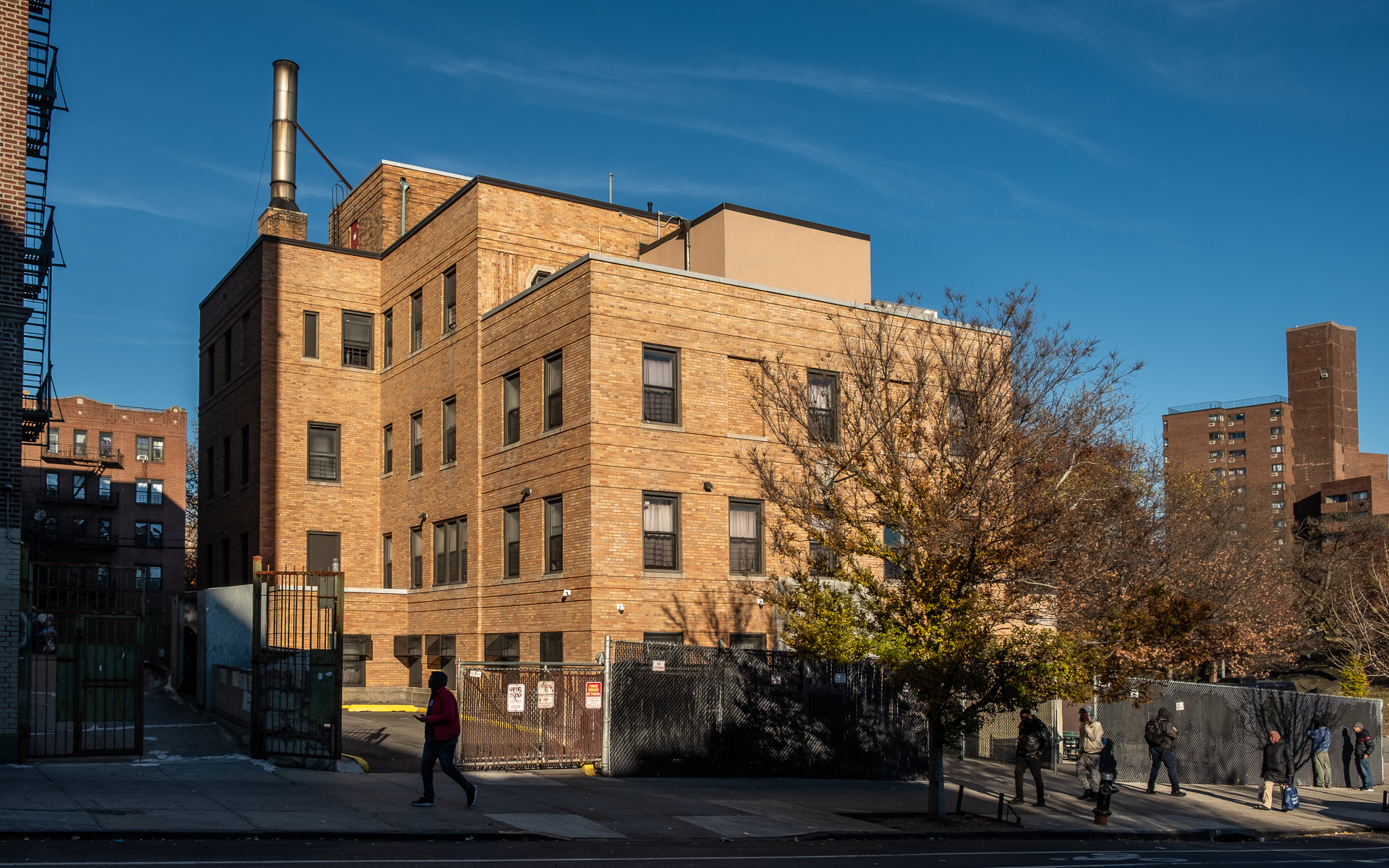
After intake in August 2022, Doe was placed at the NAICA East Tremont Shelter, a congregate men’s shelter in the Bronx. She slept in a room with approximately 15 men.
She made multiple requests to staff for a transfer to a women’s shelter or a specialized bed for transgender people, according to the lawsuit.
“In each instance, Ms. Doe’s DHS Case manager informed her that there were no available TGNC Beds and ignored Ms. Doe’s request to be moved to a women’s shelter,” the complaint reads.
To shower at East Tremont, residents have to use one large room with several showerheads. According to Doe, one day while she was showering alone, a man approached her from behind and grabbed her. Another night, Doe awoke to another resident standing next to her bed, masturbating, the lawsuit alleges. In both cases, she reported the incidents to shelter staff and requested a transfer.
When she did eventually transfer to the Second Avenue Men’s Shelter in Brooklyn in December 2022, she was placed in a congregate setting with approximately 15 male roommates. Again, she asserted her transgender identity to shelter staff and asked for a transfer. Again, she was told that she needed to be on HRT for a year, the suit alleges.
“The response from the shelter workers was often to minimize, putting the responsibility back on Ms. Doe for escalation and kind of look the other way,” said Castronovo.
While at The Second Avenue Men’s Shelter, and later at a Long Island City shelter called Pam’s Place, Doe and an advocate she was working with at a homeless services nonprofit sent emails to the director of LGBTQI affairs at DHS and submitted official complaints to DHS’ ombudsman’s office, fearing for her safety. That exhausted the list of escalations available to Doe, according to DHS’ “know your rights” brochure.
In that correspondence Doe’s advocate described repeated assaults, requested transfers, complained about Doe being roomed with cisgender men, and said shelter staff were unresponsive to her pleas.
DHS did not comment on the discrimination and assaults alleged by the lawsuit. The agency also declined to comment on the complaints and escalations surrounding Doe’s case, saying it is working to verify the facts as part of the litigation. The agency has various channels for clients to safely report and escalate concerns, a spokesperson said.
On both occasions, Doe and her advocate’s outreach was not met with appropriate action by DHS, the suit alleges.
DHS policy entitles shelter residents to request transfers when they are under threat of harm, such as gender-based harassment. Clients with disabilities—like Doe, who is diagnosed with gender dysphoria—are also entitled to additional reasonable accommodations when a facility cannot meet their needs. For transgender clients, that could include being in rooms with people of their own gender identity, single or smaller rooms, or using bathrooms and showers that lock.
Shelter staff, the lawsuit alleges, repeatedly denied Doe those considerations and failed to mediate with her, in violation of laws to protect people with disabilities navigating public systems.
In addition, staff are required to report serious incidents like sexual assaults. Those incidents require follow up by shelter supervisors. Staff are trained on incident reporting once a year, according to DHS policy.
Doe’s advocate did successfully reach DHS’ director of LGBTQI affairs, Brent Woodfield, who put in a transfer request, according to the suit. But it was almost a year later, in September 2023, before Doe left the Second Avenue Men’s Shelter.
This time she was given a “TGNC” placement at Pam’s Place, a women’s shelter in Queens. But her troubles continued, her lawyers said.
“When they finally placed her in a shelter for transgender women, they nonetheless, once again—in small rooms—placed cisgender men in the room, astonishingly,” said Merjian. “Leading, not surprisingly, to yet more assault.”
At Pam’s Place, despite being in a bed set aside for transgender individuals, Doe alleges that she was sexually assaulted by roommates, whom she identified as cisgender men. The lawsuit alleges several assaults by Doe’s roommates: that while she stayed there they inserted their penis into the sleeping Doe’s mouth, masturbated in the room while looking at her, and grabbed her head and pushed it towards their genitals.
DHS said that Pam’s Place is a women’s shelter in a converted hotel with nine beds set aside for TGNC people. They said that the agency relies on self-reported identity when making placements and does not place self-identified cisgender men in TGNC beds.
Neighborhood Association for Inter-Cultural Affairs, Samaritan Dayton Village, and Acacia Network Housing, the operators of the three shelters Doe stayed in, declined to comment, referring requests to DHS.

Getting out
New York City’s shelter system can be challenging to navigate.
“You have to be in by a certain time, and out of the shelter by a certain time, and you can’t return to the shelter until later. If you work overnights, it’s very difficult. You have to get permission, to secure passes to return and sleep, and it’s a difficult process,” Doe said.
Transgender people in shelter face increased barriers, and sometimes retaliation when they try to assert their rights, advocates for transgender people in shelter told City Limits. Their clients are often so desperate to get out of shelter that they tolerate daily insults and discrimination from shelter staff and fellow residents, th e advocates said.
“It is rare if our clients are not misgendered by staff and other participants. I mean, that is just par for the course,”said Castronovo.
DHS’ transgender policy specifically prohibits using discriminatory language and misgendering transgender clients. DHS says that it trains all shelter staff on the policies, but declined to comment on the specific accusations in the case.
Castronovo says that violence against transgender people in shelter is so normalized that his clients don’t try to fight it—they just put their head down and try to find housing.
“We ask, ‘Have you experienced violence by other shelter residents?’’ They say, ‘Yeah, of course, that’s why I’m trying to get out,’” Castronovo added.
The best chance to get out is with a housing voucher—and the most common voucher is the City Fighting Homelessness and Eviction Prevention Supplement (CityFHEPS), which serves a record 60,000-plus households, according to DSS.
Doe’s torturous stay in the shelter system was extended by the frustrating process of trying to secure housing with a CityFHEPS voucher, she and her attorneys say.
City Limits has previously reported on the difficulty of finding an apartment with a voucher, due to a tight housing market, discrimination against voucher holders, and delays in processing voucher applications.
“I found multiple apartments, and shelter staff needed to complete paperwork, but they repeatedly made simple mistakes, or took too long, or did not respond for weeks, and as a result I lost apartments,” said Doe.
Application processing times, the city’s Human Resources Administration says, have improved in recent months. At a hearing before City Council’s Oversight committee last week, officials said the application processing time is now down to 23 days, from a high of 33 days in 2024.
Currently, 11,000 people in DHS shelters have voucher shopping letters that allow them to search for housing, according to officials. 100,000 people in total were living in DHS shelters in September 2025, around 30,000 of whom were asylum seekers not eligible for vouchers, according to City Limits’ shelter tracker. Transgender voucher holders face additional discrimination because of run-of-the-mill transphobia from landlords.
Working, searching for housing, and rooming with strangers all at once took its toll on Doe.
At that time in 2022, residents had to be in shelter for 90 days in order to receive the voucher shopping letter that enables them to start applying for apartments, a rule that complicated transfers for residents like Doe who need reasonable accommodations.
“There are many rules to follow—don’t lose your bed, keep all appointments with your counselor—and when I asked to be transferred to a women’s shelter or a TGNC shelter for my safety, I was repeatedly told that this would restart the 90-day waiting period to receive the voucher,” Doe said.
Mayor Eric Adams removed the 90 day waiting period for CityFHEPS vouchers in mid-2023.
Navigating shelter as a transgender person, advocates say, takes remarkable persistence and a consistent declaring of one’s rights. Being more vulnerable to assault, they are more likely to require accommodations, transfers, and assistance—and more time from case managers who are already stretched thin.
“What we often see is that when folks advocate for themselves in these shelters, staff get annoyed at [transgender residents] because they’re too much work, they’re a burden,” said Castronovo.
Providers at the shelters Doe lived did not respond to the specific accusations.
‘Tip of the iceberg’
DHS says that it is leading the way in the country on transgender policies in shelter and that it is committed to addressing any violation of agency policy across the system.
But Doe’s lawyers allege that the discrimination against her was not an isolated incident. “It rings hollow here, given the number of people and the number of shelters and the number of times my client was told illegal things,” said Merjian.
Merjian said that recounting traumatic experiences over and over again—which pursuing a legal remedy requires—can be triggering.
“[Doe] cares very deeply about her community. She has talked constantly to other people in the system, and has let us know in no uncertain terms, that this is a systemic problem, that there are many others that have had terrifying and horribly frustrating experiences as trans individuals in the New York City homeless system,” he said.
Advocates told City Limits that some of that just means making sure DHS lives up to its policies.
“There is absolutely more work to do. The city must invest in mandatory, ongoing, Trans-specific training led by Trans experts; enforce clear accountability measures for discriminatory behavior; expand access to Trans-affirming, community-based housing models and ensure that policies protecting Trans people are actually implemented at the staff level,” Destination Tomorrow’s Coleman said in a statement.
With a limited but growing supply of beds for transgender-identifying people, “that means in many, many cases, single rooms, private showers,” said Castronovo.
Ace’s Place, the city’s dedicated TGNC shelter, has single-stalled toilets and showers and bathrooms. And in general, DHS has made efforts to move towards individual rather than congregate settings as it builds out a network of “safe haven” shelters that include individual rooms.
DHS says it’s committed to building on the work it’s already done to increase protections and resources for transgender New Yorkers.
“The Department of Homeless Services opened the nation’s first publicly funded shelter for transgender individuals at a time when their rights are roundly under attack—reflecting our firm commitment to protecting and supporting marginalized communities,” a spokesperson for the agency said in a statement.
Doe moved into an apartment on Feb. 6, 2025 with her CityFHEPS voucher after two and a half years in the shelter system.
“She’s come forward, above all else, to sound the alarm and in the hopes that we can rectify this and correct all that is wrong with the current system,” said Merjian.
To reach the reporter behind this story, contact Patrick@citylimits.org. To reach the editor, contact Jeanmarie@citylimits.org.
Want to republish this story? Find City Limits’ reprint policy here.
The post Transgender Resident Faced Discrimination, Assault In City Homeless Shelters: Lawsuit appeared first on City Limits.

Want more insights? Join Working Title - our career elevating newsletter and get the future of work delivered weekly.
