The South Carolina measles outbreak is growing at an astounding speed.
“Over the last seven to nine days, we’ve had upwards of over 200 new cases. That’s doubled just in the last week,” Dr. Johnathon Elkes, an emergency medicine physician at Prisma Health in Greenville, South Carolina, said during a media briefing Friday. “We feel like we’re really kind of staring over the edge, knowing that this is about to get a lot worse.”
On Friday, the state’s health department said that 124 measles cases had been diagnosed since Tuesday, bringing the state’s total since the outbreak began last fall to 558.
A spokesperson for the South Carolina Health Department said in an email that “eight people, including adults and children, required hospitalization for complications of the disease since the start of the outbreak.” It was unclear how many people are currently hospitalized.
During the Friday briefing, Prisma Health pediatric infectious disease specialist Dr. Robin LaCroix estimated that 200 people are now “actively infected.”
The South Carolina Health Department said that 531 people are in a 21-day quarantine following an exposure to measles.
The number of cases is expected to grow. The health department’s report only reflects the number of people whose illness has been confirmed as measles by a lab.
Because measles is so contagious and people can spread the virus up to four days before symptoms appear, each sick individual has the potential to infect 12 other people, LaCroix said during the briefing.
“The numbers that you see are actually an undercount,” said Dr. Deborah Greenhouse, a Columbia, South Carolina-based pediatrician, in a separate interview. “The reality is that there’s a lot more. Not everyone with measles is going to see a physician.” Greenhouse is also a past president of the South Carolina chapter of the American Academy of Pediatrics.
Prisma Health declined Friday to comment or give details on hospitalized patients’ symptoms.
Dr. Helmut Albrecht, an infectious disease specialist at Prisma Health, said during the briefing that, in general, people who are admitted to the hospital are often critically ill. “Patients don’t get hospitalized if they have red spots,” he said.
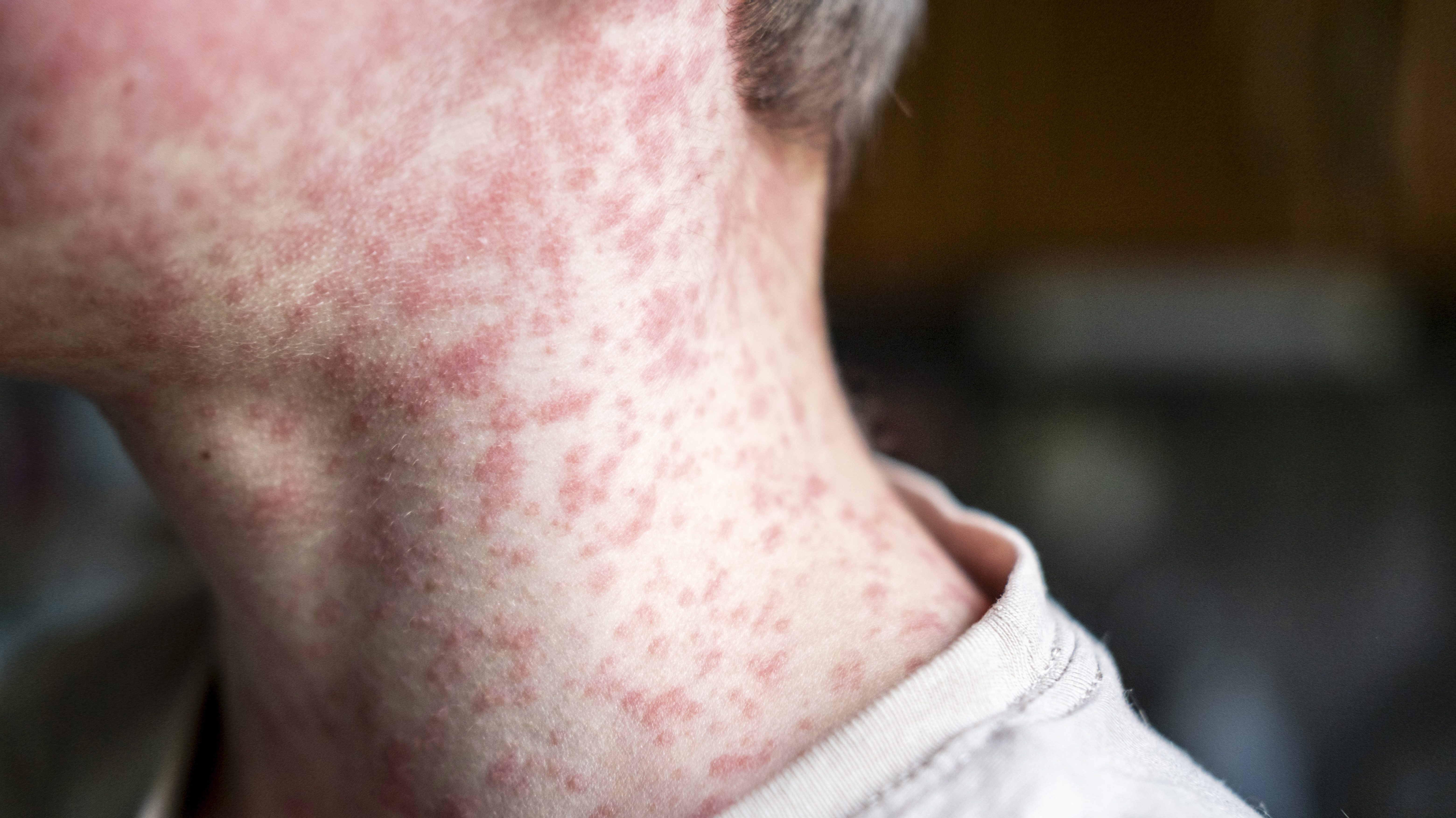
Measles is often characterized by a splotchy red rash that often starts on the scalp and travels down the person’s body.
The majority of patients reported in South Carolina are children and teenagers. Most are unvaccinated.
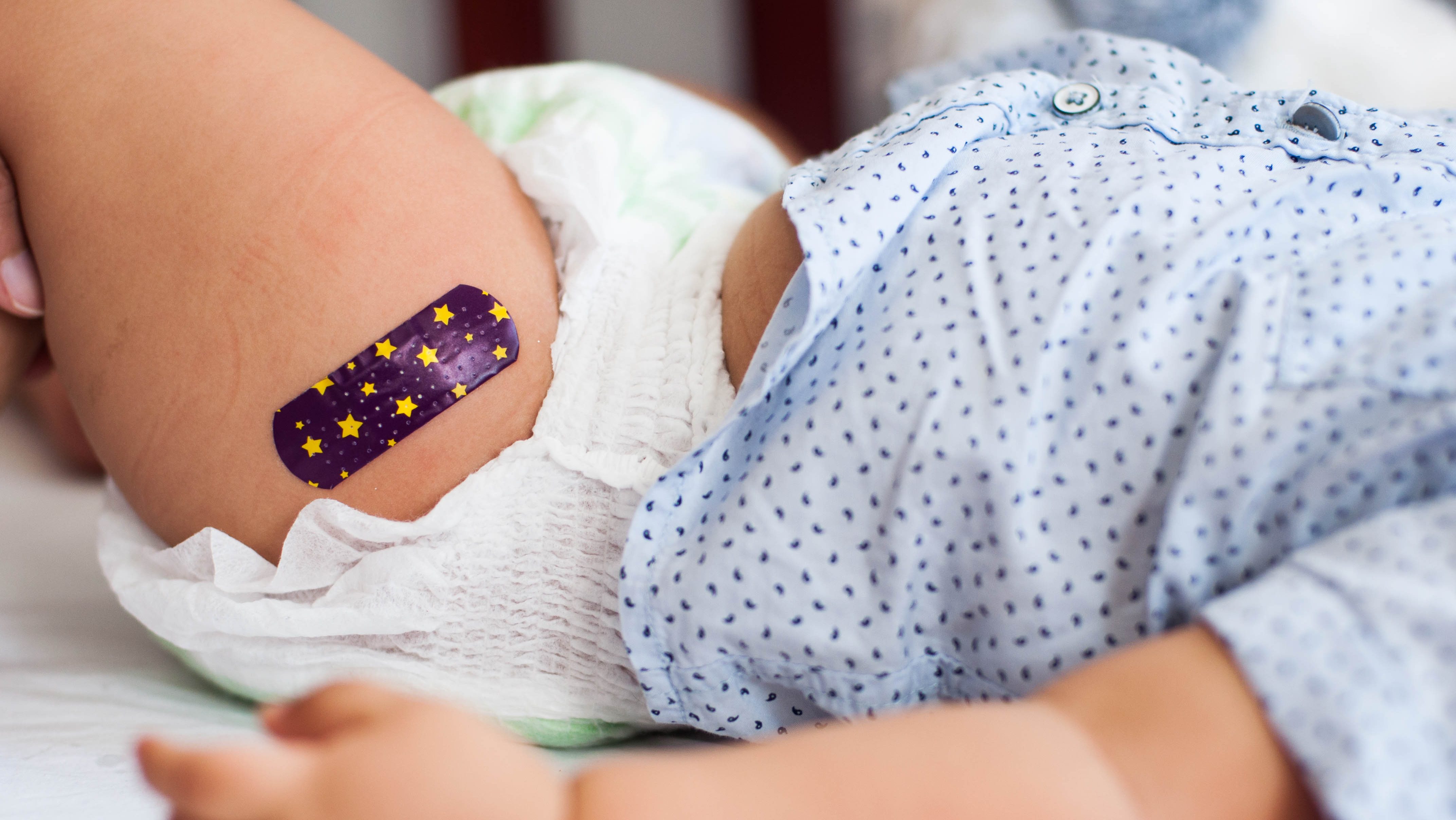
No vaccine is 100% effective, but the measles-mumps-rubella (MMR) vaccine comes close. Two doses, usually given around age 1 and then again around age 4, are 97% effective at preventing measles, according to the Centers for Disease Control and Prevention.
According to NBC News data, the K-12 vaccination rate for MMR in Spartanburg County was 90% for the 2024-25 school year, below the 95% level doctors say is needed to protect against an outbreak. In neighboring Greenville County, the MMR vaccination rate was 90.5%.
Few people in the outbreak zone are taking advantage of free shots provided by the state health department.
On Wednesday and Thursday, the South Carolina Department of Public Health deployed mobile health units to Spartanburg offering free measles vaccinations. Just 18 people showed up to get the shots: nine adults and nine kids, state health officials told NBC News.
Dr. Eliza Varadi, a pediatrician in private practice in South Carolina, said the outbreak is centered around a community largely populated by people who immigrated from Ukraine to Spartanburg County within the past few decades. Many came to the U.S. with a level of vaccine distrust based on their experiences under Soviet control, said Varadi, who is originally from Russia. She hasn’t treated patients in the current outbreak but provides care for many families from Russia and Ukraine.
“I find myself constantly having to explain that, ‘yes, these vaccines are safe,’ and ‘no, they aren’t going to cause harm,’” Varadi said. “It’s a lot of re-educating with a lot of families coming from that area.”
About an hour and a half south of Spartanburg, in Columbia, some families can’t get the shots quickly enough. “I’ve been getting phone calls from families saying, ‘I want that vaccine, like, yesterday. I want it early. What can I do?,’” Greenhouse said. During outbreaks, babies as young as 6 months can get the shot. They’ll still need the other two doses, experts say.
On Wednesday, health officials said that someone visited the South Carolina State Museum in Columbia on Jan. 2 while they were infectious. NBC affiliate station WIS reported that nearly 1,000 people visited the museum that day.
Anyone who is unvaccinated and exposed to the virus would need to quarantine for 21 days, the time it takes for symptoms to develop. There’s a work-around, however: Get the shot as soon as possible.
“If we can identify that exposure within a short window, 72 hours, basically three days, we can give you an immunization, and your body will make its own defensive antibodies to protect you from this virus, and you can avoid quarantine,” LaCroix said.
Three other states have been affected by the South Carolina outbreak, including Ohio, where at least three children have been diagnosed, according to NBC affiliate station WKYC.
The North Carolina Department of Health and Human Services has reported eight cases since December. Seven of those are linked to South Carolina, with five in Buncombe County, near Asheville.
This week, Washington state’s Snohomish County Health Department confirmed three measles cases in children who had direct contact with a family visiting from South Carolina over the holidays. The county’s health officer, Dr. James Lewis, said that while he hoped the outbreak would be contained, more diagnoses are likely.
“I really think there are cases out there in the community right now that are relatively mild, and people are managing at home,” Lewis said.
The children in Snohomish County are all under age 10, Lewis said. None needed to be hospitalized.
Albrecht, of Prisma Health in South Carolina, said he and his colleagues in public health are greatly worried about additional spread.
“You should be, too,” he said. “We have right now, the largest outbreak in the U.S., and it’s going to get worse before it gets better.”

This story uses functionality that may not work in our app. Click here to open the story in your web browser.

Want more insights? Join Working Title - our career elevating newsletter and get the future of work delivered weekly.


