After years of searching, the group behind some of Chicago’s most popular farmers markets has secured its first permanent location.
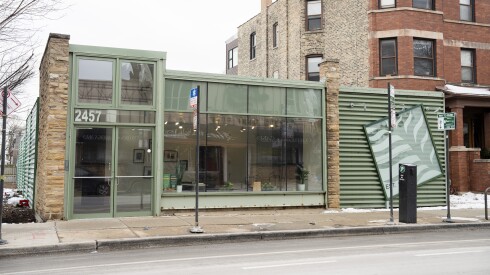
The nonprofit Green City Market announced last week that it purchased the North Center building at 2457 W. Montrose Ave., and it will build out the space to host year-round farmers markets.
The 4,872-square-foot property was previously home to Plants, an interior landscaping company and retail greenhouse. The building was purchased for $899,000, and the deal closed Dec. 23, Green City Market Executive Director Letisha Steele said.
Steele, who joined the nonprofit in 2025, said she expects to open the space sometime this year and plans to host a community event as early as March.
Green City’s mission is to expand accessibility to fresh, locally grown food. Its markets are “producer only,” meaning farmers sell what they grow and other vendors must source ingredients directly from the nonprofit’s farmers whenever possible, Steele said.
The late Chicago chef Abby Mandel, who also authored food columns and cookbooks, started Green City in 1999 with nine local farmers at the crosswalk next to the Chicago Theatre. It was Chicago’s first producer-only farmers market, according to the nonprofit.
Before her death in 2008, Mandel had set aside $1 million for her charitable foundation to fund the purchase of a brick-and-mortar location.
“She really wanted Green City to be able to continue on and to continue to uplift farmers,” Steele said. “She provided the money for the purchase of a building so that there could be a forever place for the farmers to be able to come and sell.”
Over the years, the nonprofit conducted several feasibility studies to determine how a permanent location could become a reality, Steele said.
In the meantime, the market began expanding some of its services, such as accepting food assistance cards from the Supplemental Nutrition Assistance Program.
It also operates an indoor market in Avondale and outdoor seasonal markets in Lincoln Park and the West Loop. Hosting chef-led demonstrations and educational programs are also a staple of the organization. But many of the demonstrations and events can now be held at North Center.
“Lincoln Park and West Loop will always be there. They’re a part of our core structure,” Steele said. “[North Center] will be a place to really grow what people see at that market and provide more opportunities for farmers.”

It’s also an ideal location because it’s near several bus routes and about a half-mile from the Brown Line’s Western stop, Steele said. The property is next door to an Aldi.
“It just felt like the stars aligned and we were able to move on it,” she said. “We were talking to people in the neighborhood, talking to the alderman [about] what does the neighborhood need. Walking into this space, it felt like, ‘OK, this is it.’”
Steele lovingly described the building as a “mullet,” with its nondescript front room but an expansive greenhouse in the back, which will be designed to cater to the farmers working with Green City.
Farmers wanted “an aggregation point in the city,” Steele said. That wish will be realized with a large walk-in cooler in the back of the building to store produce. There will also be a kitchen for cooking classes.
Steele said federal funding cuts to SNAP make the market’s mission to expand food access even more relevant.
“Literally none of this would be possible if Abby didn’t have that vision,” Steele said. “And who would have known that food access and farmer support would be in such dire straits like they are now.”
A Greater Chicago Food Depository spokesperson said the food bank “is bracing for a new wave of food insecurity amid an already ongoing hunger crisis. We will do everything in our power to ensure food is available for anyone who visits a local pantry or meal program, but we cannot meet the need alone.”
Starting Feb. 1, SNAP recipients between the ages of 18 and 64, without dependents, have to meet certain work requirements to keep the benefits, or prove they qualify for an exemption. Nearly 2 million Illinois residents are enrolled in the program, and about 400,000 residents could lose SNAP benefits because of the work requirement.
“I just don’t think farmers markets are just for privileged people,” Steele said. “Going to a farmers market is not reachable for a lot of folks, and I feel like it should be reachable. … I don’t believe that food should be gate-kept.”


Want more insights? Join Working Title - our career elevating newsletter and get the future of work delivered weekly.
