The union for Los Angeles firefighters is expected to launch a campaign Thursday to propose a half-cent sales tax increase to fund the Los Angeles Fire Department for the November election.
Members of United Firefighters of Los Angeles (UFLAC) and city officials will gather at Fire Station 58 on Robertson Boulevard to urge LA voters to sign the petition so the ballot measure would qualify for the midterm election, the union said Wednesday.
The union added, citing a severe staffing shortage and heavy workload, the LAFD is not functioning the way it should. More funding is needed to effectively operate the fire department, helping fire crews save lives during emergencies, UFLAC said.
“Due to decades of underinvestment, the LAFD currently operates with the same number of firefighters as in the 1960s, six fewer stations, and five times the call load,” the firefighters union said in a news release, adding over 50 of the LAFD stations are struggling with aging infrastructure.
Funds from the half-cent sales tax would allow the Los Angeles Fire Department to hire more firefighters and civilian staff, purchase new fire trucks, engines, ambulances and other equipment, as well as build new fire stations and repair existing ones, according to the union.
Tax revenue would go into a special fund, only for the use of the fire department. The measure would also mandate a so-called “maintenance of effort” provision, which would require the city to maintain general fund
support for the LAFD. In essence, the provision would prevent existing funding from being replaced by revenue from the sales tax.
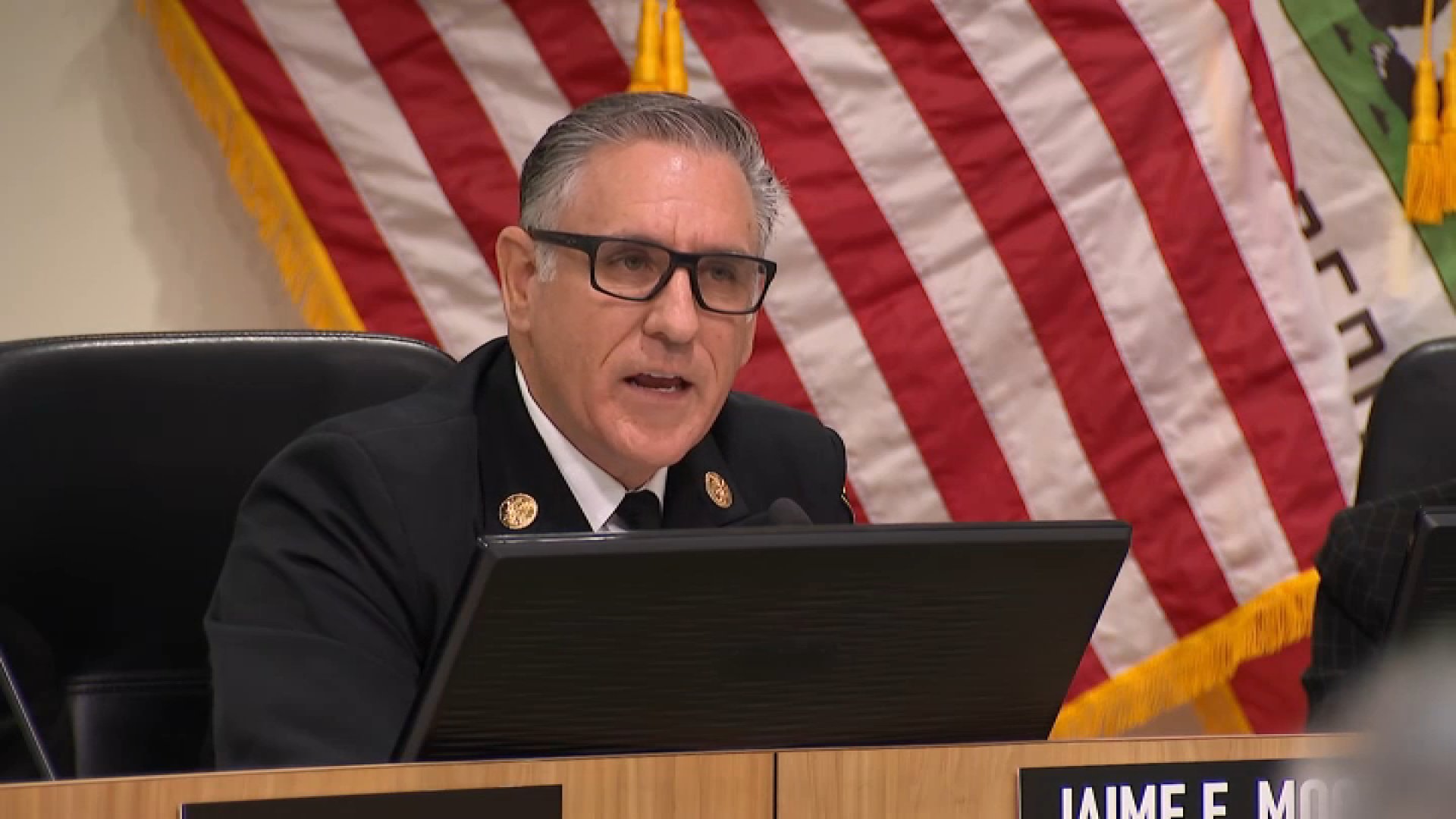

The proposal would also require annual audits that would be presented to the general public, and establish a citizens oversight committee to track all spending from the tax.
Proponents estimate the tax would generate at least $345 million in the first year.
The sales tax in Los Angeles stands at 9.75%. If approved by the voters, the ballot initiative would increase it to 10.25%, which would be less than the cities of Alhambra, Burbank, Glendale, Long Beach, San Fernando, West
Hollywood and Pasadena with a 10.5% sales tax. It would also be lower than Culver City and Santa Monica, which have a 10.75% sales tax.
In past years, LAFD officials have advocated for more funding for their department, pointing to straining personnel and resources to fight fires and respond to medical emergencies.
The population of Los Angeles in 1960 stood at 2.4 million people, and the LAFD responded to 100,985 emergency calls for service. By 1965, the department had 3,379 authorized firefighter positions with 112 fire stations.
LAFD officials say more funding is needed to meet requirements set by the International Association of Fire Fighters. The organization conducted a review of the department, which found LAFD needs 62 new fire stations, 4,000 additional firefighters, dozens of new dispatchers, seven new battalions, and emergency management service substations.
The Howard Jarvis Taxpayers Association criticized the proposed tax initiative. Voters placed taxpayer protections in the state constitution with Proposition 13 in 1978 and Proposition 218 in 1996. These require local taxes for a special purpose to be approved by two-thirds of voters.
Beginning in 2017, state courts carved a loophole that said the constitution does not apply to “citizen initiative tax increases,” according to the association.
Voters should ask, “What is in the city budget that is a higher priority than adequately funding the fire department?’ It is totally unacceptable that the City Council and Mayor (Karen Bass) have underfunded the
fire department and essentially told the firefighters’ union to go out and get their own tax increase,” the association said in a statement.
“Sales taxes are already very high in Los Angeles, and they hit hardest on people who can least afford to pay more,” the statement continued.

Want more insights? Join Working Title - our career elevating newsletter and get the future of work delivered weekly.
