Hundreds of NASA employees and contractors are working the three-day holiday weekend in an effort to attempt something that hasn’t happened since December 1972: sending astronauts to the moon.
During a news conference Friday, NASA officials said all systems are go, and the 11-million-pound stack, secured to NASA’s huge crawler-transporter — its second iteration to be precise — is set to roll out from the cavernous Vehicle Assembly Building around 7 a.m. Saturday
Final preparations to transport the Artemis II mission stack, comprised of the Space Launch System rocket and the Orion spacecraft, to Launch Pad 39B are underway.
The stack was built in the Vehicle Assembly Building over a period of months, checked out and is scheduled to make the 12-hour-long journey to the launch pad at a speed of 1 mph.
There was an air of excitement from the launch team about Saturday’s rollout.
“These are days we live for. SLS and Orion are ready to go to the pad. This mission feels a lot different from Artemis I, as Artemis II is the next step to landing on the moon,” said John Honeycutt, Artemis II mission management team chair
View Friday’s news conference below:
Honeycutt has the final say in determining whether Artemis II is a go or a no go for launch, based on myriad inputs provided to him.
“We have one job — safe return, and we will fly when we are ready.”
A big step for doing so comes Saturday at 7 a.m., when the stack begins its slow crawl to the launch pad.
The crawler-transporter will keep the stack perfectly level as it ascends an incline to the launch pad, where it’ll deposit the stack and its launching platform. It’s after that point officials will begin the lengthy, but necessary, process of checking the hardware, software and thousands of other items on the stack, launch control center and supporting elements of the Artemis II mission.
Coverage of the rollout will be streamed live on NASA’s YouTube channel starting at 7 a.m.
The four members of the Artemis II crew have been in extensive and lengthy training for their 10-day lunar flyby mission. They will be the first humans to be in proximity to the moon since the three NASA astronauts who made up the Apollo 17 crew in December 1972.
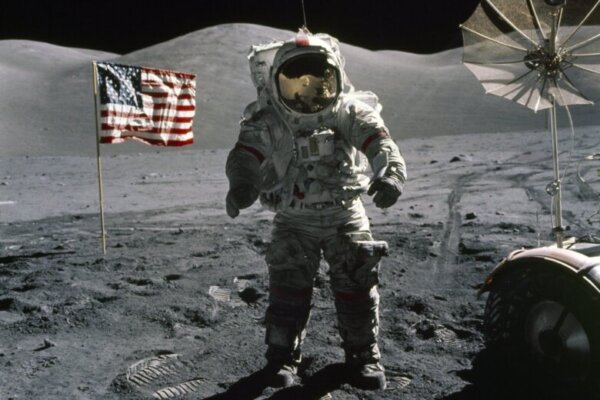
Astronaut Gene Cernan and Harrison Schmitt, who is popularly known for being the only scientist to walk on the moon to date, spent three days on the lunar surface while their crewmate Ron Evans orbited overhead in the Apollo Command Module.
Society has learned a lot about Earth’s lunar satellite since the Apollo program ended with Apollo 17.
Myriad uncrewed lunar missions have been carried out by numerous nations since Apollo 17, with probes having orbited, landed and, in several instances, crashed. More crewed and robotic missions are in the works by India, China, Europe, Russia and NASA.
Currently scheduled for 2029, Artemis III will be NASA’s crewed landing attempt at the lunar South Pole. China has scheduled its own crewed lunar landing for 2030.
But, with Artemis II, it will be human eyes and Nikon Z5 cameras and lenses observing and photographing humankind’s return to the moon.
While the Artemis II crew won’t land on the moon, they will conduct a flyby with the hopes of seeing the far side of the moon in full phase.
Breaking down the mission objectives
In a forthcoming article, expect a detailed breakdown of what officials are trying to accomplish on the scientific front.
I visited Goddard Space Flight Center recently and interviewed the lunar scientist responsible for establishing the science parameters of the mission.
If all goes well, I will witness the rollout of the stack as well.
The current launch window dates for February, March and April can be viewed here.
As always, the scheduled date for each evolution can change very quickly.
Stay tuned to WTOP for ongoing coverage of Artemis II.
Follow my daily blog to keep up with the latest news in astronomy and space exploration. You can email me at skyguyinva@gmail.com.

Want more insights? Join Working Title - our career elevating newsletter and get the future of work delivered weekly.
