The 2026 legislative session started with a stern message from Gov. Ron DeSantis to lawmakers.
“Florida might have the lowest taxes at the state level, but our citizens have been squeezed by escalating property tax assessments and mileage increases at the local level,” DeSantis said.
The governor is pushing for property tax reform and continued his efforts in front of lawmakers in the State House on Tuesday.
There are several proposals making their way through the state legislature. The most far-reaching is HJR 201, which would eliminate non-school homestead property taxes.
Another proposal, HJR 205, would exempt residents 65 and over from paying non-school property taxes. And HJR 211 would increase the maximum value of the accrued Save Our Homes benefit.
Each proposal specifically states that, if passed, school and law enforcement funding will not be impacted.
Homeowners looking for relief
NBC6 met homeowner Joel Boisrond outside the Broward County Tax Appraiser’s Office. He told us he was hoping to appeal the amount he owes in property taxes.
“Oh, the taxes come in like crazy,” Boisrond said. “The way is going up is too high.”
He said he’s owned his property in Lauderdale Lakes for five years, and each year his property taxes have increased.
“The tax comes in like almost $11,000,” he said. “And when it’s like that, sometimes you can lose your house because you didn’t know if it’s coming like so high like that.”
He is one of several property owners NBC6 spoke with who are looking for a financial break.
An analysis from the Broward County Property Appraiser’s Office shows that for proposal HJR 201, the average savings will be about $3,387 per homeowner.
“If you do remove or eliminate at least partially the property taxes, then you have to increase taxes somewhere else. That might be that you increase maybe sales tax, maybe tourism tax,” said real estate professor Eli Beracha.
Beracha, the director of FIU’s School of Real Estate, said not only will lost revenue need to be replaced, but reform could lead to an increase in home prices.
He estimates property taxes can account for up to 25% of the cost of owning a home, and a decrease could amount to an increase in home prices.
Senior economist Joel Berner with Realtor.com agrees. He said increased home values could benefit current homeowners but keep first-time homebuyers at bay.
“And then if you add in another 7% to 9% increase in home values, it makes it really difficult for people who are currently renting and want to become home buyers for them to be able to do that. So, I think it’s going to suppress the homeownership rate,” Berner said.
Impact on city and county services
Property taxes are the primary revenue source for local governments, and each proposal has the potential to take revenue from local city and county services.
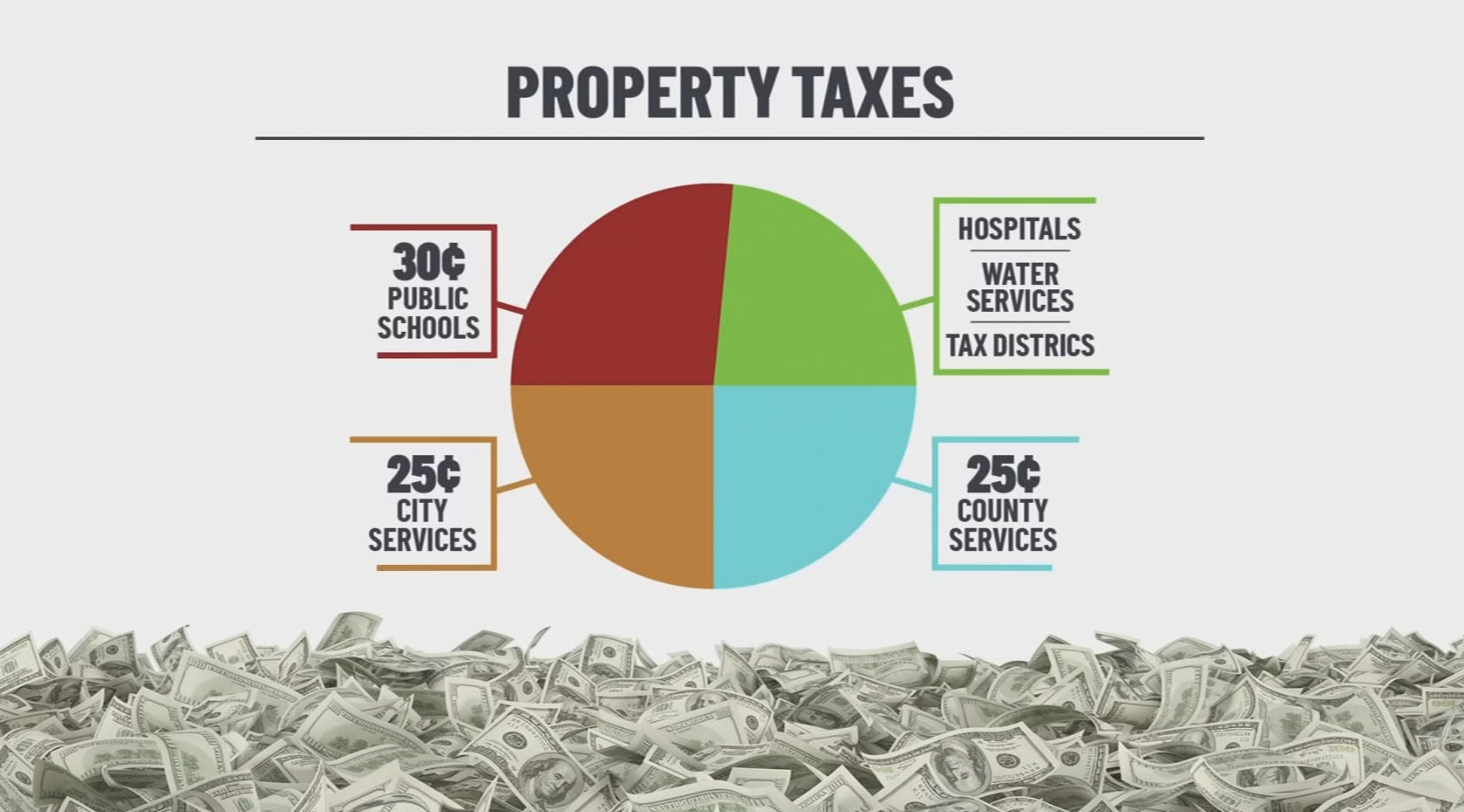
For every dollar a homeowner pays in property taxes, roughly 30 cents go to fund public schools; another 25 cents go to county services and around 25 cents go to your local city. The remaining amount goes to fund hospitals, water services and other tax districts.
“People hate the idea of paying taxes, but they don’t mind paying fees,” said City of Plantation Mayor Nick Sortal.
NBC6 sat down with Sortal, who warns that major property tax cuts could lead to major budget issues for city and county governments.
“No matter which of these proposals go through, we’re going to be greatly harmed. It’s not going to be just cutting flesh. This is going to be cutting bone, too,” Sortal said.
Sortal said the City of Plantation has already created an estimate of how much money they would need to make up, depending on each proposal.
According to the estimate, if the proposal to eliminate non-school property taxes on homesteaded properties goes into effect, then the city would lose $36 million from its budget.
He said cuts would have to be made from their Parks and Recreation and Public Works Departments.
Sortal said the city is already taking action by putting major projects on hold.
“We have a very popular splash pad on the east part of Plantation,” he said. “We want to put one on the western side too, but we’re not going to start developing that or commit to that during these economic times.”
The governor has mentioned that lost revenue could come from the state’s current surplus or increased taxes on rental properties and second homes, but a concrete plan has not been rolled out.
If a proposal makes it to the budget, the measure will need to pass with at least 60% approval of voters.

Want more insights? Join Working Title - our career elevating newsletter and get the future of work delivered weekly.
