After thousands of homes sustained smoke damage from the Palisades and Eaton fires, some families said sometimes they wish their properties had been destroyed in the fire. They described a frustrating process of trying to get coverage from their insurance companies for smoke damage.
While the raging flames of the 2025 wildfires never reached their houses – leaving their structures physically intact – the toxic smoke did.
Tim Szwarc and Claire Thompson, Altadena homeowners, were first relieved to see their home was still standing after the Eaton Fire. But their relief has turned into uncertainty and frustration.
“It’s challenging because there’s not really a roadmap on how you remediate a home as toxicas ours,” said Thompson.
The couple said one year after the Eaton Fire, they are still learning just how poisonous and contaminated their home is.
“This is the third type of mask that I’ve now owned,” Szwarc said while holding a chemical respirator. “Each time, I learn it’s not enough, and then I upgrade. Hopefully, this is safe enough now.”
“When you use the term wildfire, to me, I think of Smokey the Bear … This is like a small city burning down to the ground,” Industrial hygienist Dawn Bolstad-Johnson said.
Dawn Bolstad-Johnson, a certified industrial hygienist with four decades of experience, said smoke from the Palisades and Eaton fires carried a different chemical load compared to a wildland fire.
“It went 24 days, and it was over 5,000 homes in the Palisades that were completely destroyed, and a bunch more that were partially burned, and then 9400 homes lost in the Eaton Fire,” she said.
Within the last year, she has tested more than 100 homes impacted by the LA fires, assessing environmental hazards and recommending ways to manage or eliminate health risks.
“When you use the term wildfire, to me, I think of Smokey the Bear,” said Bolstad Johnson. “This is a configuration of a neighborhood. This is like a small city burning down to the ground.”
She explained the toxic load that the fires left behind is unparalleled based on the synthetic content of modern living, including burned lithium batteries, computers, cars, solar panels, plastics and furniture.
“It’s a very petroleum-based fire, not so much a bio-mass fire,” Bolstad-Johnson said. “And that smoke is carrying a lot more with it than what you would see in a typical biomass fire.”
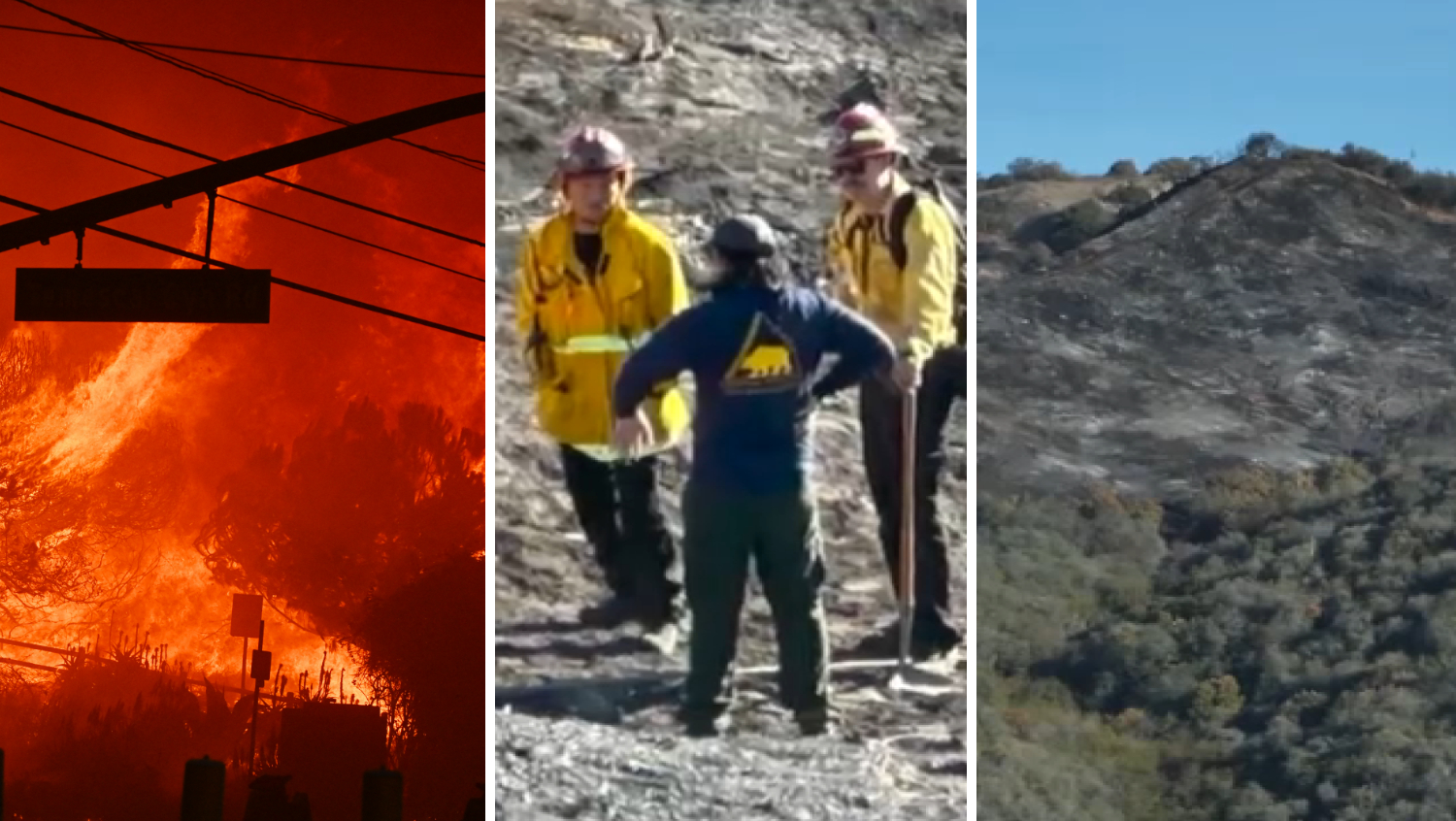
She conducted research in the late 1990s on the risk of cancer-causing toxins among firefighters. She said she was among the first to recommend firefighters continue to wear their breathing apparatus after a fire is extinguished.
“You have to look at the smoke as the bus. That’s the bus that carries all the chemistry, all the particulates, the acid gases, the aldehydes, the volatiles,” she said, explaining the harmful materials that seeped into homes through the attic and crawl spaces, but also through doors, windows and cracks in the homes.
“Remember, these were hurricane-force winds. That air is pushed hard to come in. It’s coming through the chimney in that way, coming through the dryer vent that exhausts inside,” Bolstad-Johnson added.
There are currently no state or federal standards when it comes to testing for or remediating toxins caused by smoke. California’s insurance commissioner established a “Smoke Claims and Remediation Task Force” in May 2025 to address that. But there are no environmental scientists or toxicologists on the 13-member panel.
In an interview with NBCLA, California insurance Commissioner Ricardo Lara admitted that there are no clear standards but maintained that he’s trying to address the issue.
“We’re going to draft legislation,” Lara said. “We’re going to make it retroactive to make sure that they’re covered. And hopefully the legislature has the guts to get this done and protect the Eaton and Palisades fire survivors.”
Industrial hygienists like Bolstad Johnson said there is peer-reviewed, published research to use when testing and remediating, detailed in “The Chemistry of Fires at the Wildland -Urban interface” compiled by the National Academies of Sciences, Engineering and Medicine.
“You have to look at the smoke as the bus. That’s the bus that carries all the chemistry, all the particulates, the acid gases, the aldehydes, the volatiles,” Bolstad-Johnson added.
Szwarc and Thompson said they are experiencing the impact of toxic gasses and particulates firsthand. Testing of their home revealed lead levels exceeding EPA limits by 800 times, along with cyanide and arsenic.
The couple said their initial insurance adjuster told them they would need to remove their drywall, plaster and insulation while disposing of all porous materials. But their insurance replaced that adjuster months later. The new adjuster told them it wasn’t necessary to remove the items “based on the photos.”
“You can’t see toxins in a photo,” Thompson said. “But he told us our house looked pristine. It didn’t need a lot of cleaning. They believe we can just superficially clean off our items and move back,”
The couple said they are waiting for the insurance company to send its own industrial hygienist to conduct an assessment. They said no one connected with their insurance has visited their property since January 2025.
More than a dozen homeowners who are going through a similar experience spoke with NBC4 Investigates off camera because of concerns they could face ramifications from their insurance or landlords.
All said they have experienced insurance delays as well as denials for testing and cleaning of toxins in their homes.
All of them told NBC4 Investigates they have had multiple adjusters assigned to their claims without resolution, something they see as a delay tactic by the insurance companies.
A year after the fires, two homeowners told NBCLA that they sometimes think it would have been easier if their homes had burned down.
“We’re left in this very precarious position of deciding: is this family heirloom worth the risk to keep?” one victim said. “Now it just feels like we’re gambling with our long-term well-being. Our lives are in limbo.”
Szwarc and Thompson echoed the sentiment, saying they don’t know what their future is going to look like,
“We want (the insurance company) to follow the science,” Thompson said.
”Frankly, I’m concerned that we may not achieve the level of remediation necessary to make this home safe to live in again,” Szwarc said.
This story uses functionality that may not work in our app. Click here to open the story in your web browser.

Want more insights? Join Working Title - our career elevating newsletter and get the future of work delivered weekly.
