The Trump administration launched a major military attack on Venezuela on Saturday morning, bombing facilities and capturing leader Nicolás Maduro and his wife and flying them to the United States to face charges. President Donald Trump said the U.S. will temporarily “run” Venezuela and work to tap the country’s massive oil reserves.
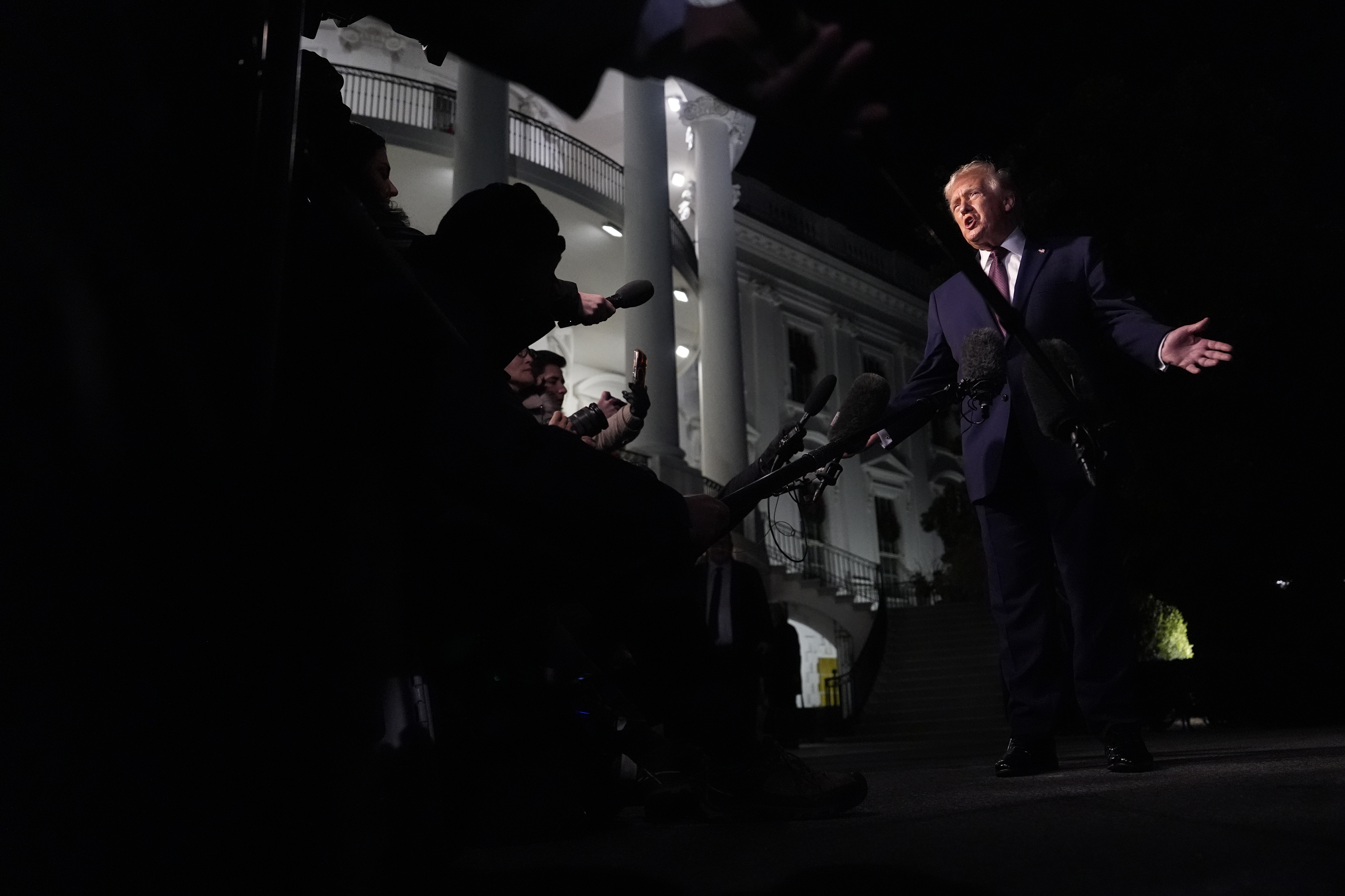
“We’re going to run the country until such time as we can do a safe, proper and judicious transition” to new leadership, Trump said at a news conference in Florida. He didn’t provide more detail about how the U.S. would control Venezuela, saying a group of officials would be named to oversee it.
Trump said he didn’t want a new leader to take over in the wake of Maduro’s capture who would result in “the same situation that we had for the last long period of years.”
“We can’t take a chance that somebody else takes over Venezuela that doesn’t have the good of the Venezuelan people in mind,” he said.
Trump’s remarks were delivered at his Mar-a-Lago resort in Florida, where he was flanked by some of his top advisers — including Secretary of State Marco Rubio, Defense Secretary Pete Hegseth and Gen. Dan Caine, the chairman of the Joint Chiefs of Staff.
Asked later Saturday whether he was prepared to have troops on the ground in Venezuela, Hegseth told CBS News that Trump would “set the terms, and ultimately, he’ll decide what the iterations are of that.”
“We’re going to control what happens next. Because of this brave decision, President Trump has shown American leadership, and he’ll be able to dictate where we go next,” he said.
Maduro flown to New York
Trump confirmed at the news conference that Maduro and his wife were en route to New York, where, he said, Maduro had been indicted. Maduro arrived in New York on Saturday afternoon and could appear in court as early as Monday.
Trump said that Venezuelan Vice President Delcy Rodríguez “was sworn in as president just a little while ago” and that she had a “gracious” conversation with Rubio to offer her support.
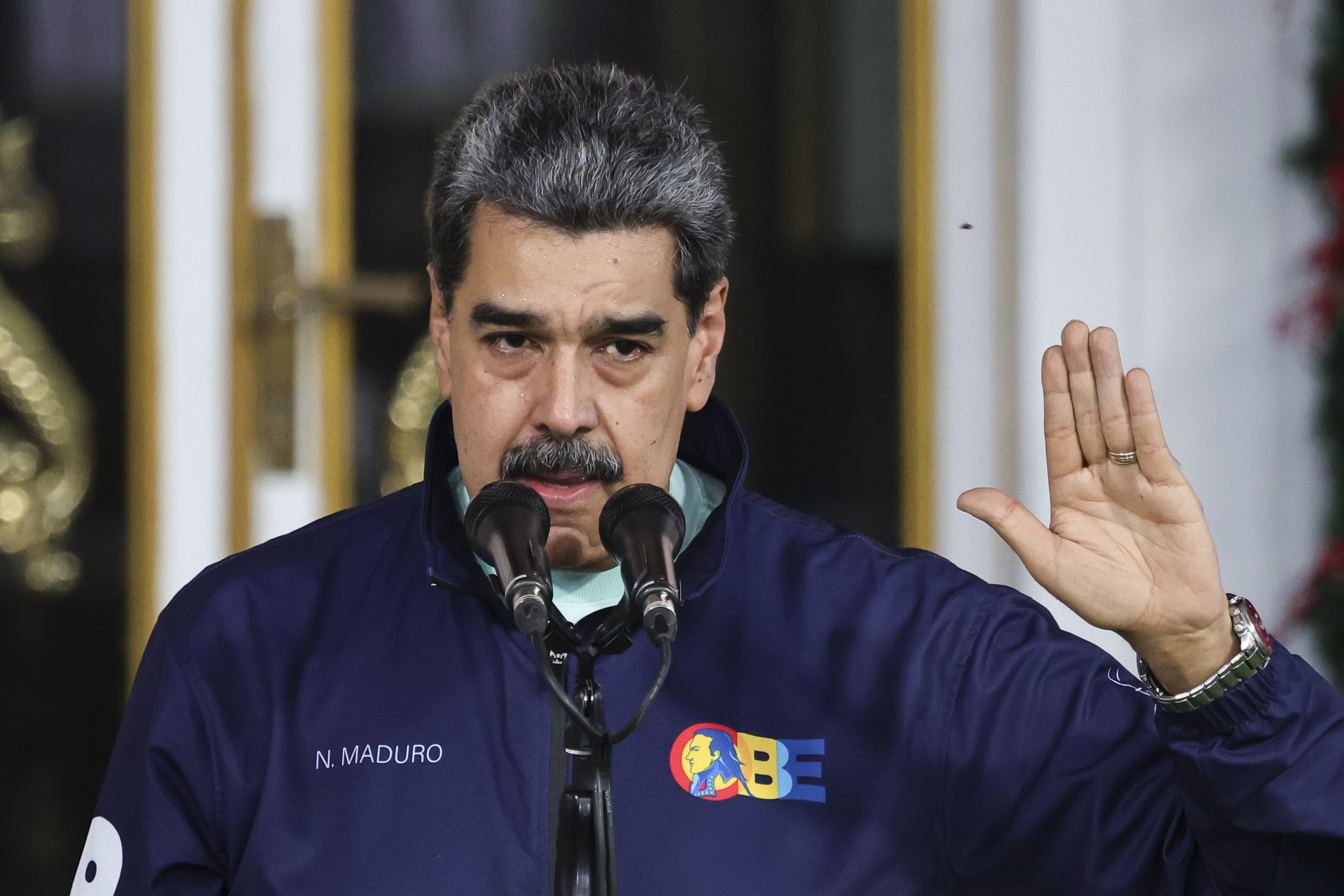
But on state television later, Rodriguez told the Venezuelan public, “We demand the immediate liberation of President Nicolás Maduro and his wife, Cilia Flores,” calling Maduro “the only president of Venezuela.”
Venezuela’s supreme court on Saturday night issued an order instructing Rodríguez to assume the role of acting president with immediate effect.
U.S. capture of Maduro was months in the making
The military operation, which officials said had been planned for months and took several hours, is the latest move that the Trump administration has described as part of a crackdown on drugs entering the U.S. It comes just weeks before the first anniversary of Trump’s second inauguration.
Two U.S. officials familiar with the planning told NBC News on Saturday that Trump approved the military and law enforcement actions in Venezuela more than a week ago.
In remarks Saturday, Caine confirmed that military forces waited over a week for the weather to clear up.
“Weather in Venezuela is always a factor this time of the year, and over the weeks through Christmas and New Year’s, the men and women of the United States military sat ready, patiently waiting for the right triggers to be met and the president to order us into action,” Caine told reporters.
“Last night, the weather broke just enough, clearing a path that only the most skilled aviators in the world could maneuver through,” he said.
Caine said that Trump gave the order to go at 10:46 p.m. ET Friday and that military forces arrived at Maduro’s compound by 1:01 a.m. ET Saturday. By 3:29 a.m. Saturday, Caine said, the military forces were back over water with Maduro and Flores.
Trump, who said he watched the operation unfold live from Mar-a-Lago, said Maduro “was trying to get into a safe place” made of steel as U.S. military forces stormed his compound.
“He was trying to get to a safe place, which wasn’t safe, because we would have had the door blown up in about 47 — I think, 47 seconds,” Trump said. “It was a very thick door, a very heavy door, but he was unable to get to that door. He made it to the door. He was unable to close it.”
Caine said the aircraft used in the operation included multiple types of military planes, as well as remotely piloted drones, all of which he said helped protect the helicopters and personnel in Caracas. Caine added that the U.S. helicopters were fired on and that U.S. forces “replied to that fire with overwhelming force in self-defense.”
Caine added that one U.S. military aircraft sustained damage but was still able to fly. Later Saturday, a U.S. official and a White House official told NBC News that the operation in Caracas resulted in several injuries to U.S. troops, all of whom remain stable.
Vice President JD Vance was also involved in the military operations, according to a spokesperson.
Indictment allegations
Minutes before he spoke at Mar-a-Lago, Trump posted a photo on Truth Social appearing to show Maduro aboard the USS Iwo Jima wearing what appeared to be a blindfold and holding a bottle of water. Trump also posted a video of the U.S. strikes on Venezuela set to “Fortunate Son,” a famous anti-war song by Creedence Clearwater Revival.
Attorney General Pam Bondi said on X that Maduro would “face the full wrath” of the U.S. justice system.
The charges, in an indictment unsealed Saturday, include narco-terrorism conspiracy, cocaine importation conspiracy, possession of machine guns and destructive devices, and conspiracy to possess machine guns and destructive devices.
In the indictment, federal prosecutors alleged Maduro “is at the forefront of that corruption and has partnered with his co-conspirators to use his illegally obtained authority and the institutions he corroded to transport thousands of tons of cocaine to the United States.”
They also allege that Maduro and other members of the Venezuelan government sold passports, provided protection and enabled the sale and transportation of hundreds of tons of illegal drugs through their ports, including drugs from several recognized Mexican drug cartels.
In his remarks, Trump said he had seen the evidence that was gathered for the indictment, and he blamed Maduro for drug trafficking and crime in the U.S.
“I’ve seen what we have. It’s both horrible and breathtaking that something like this could have been allowed to take place for many years after his term as president of Venezuela expired,” Trump said. “Maduro remained in power and waged a ceaseless campaign of violence, terror and subversion against the United States of America, threatening not only our people, but the stability of the entire region.”
Maduro was first indicted, alongside 14 other people, in 2020, during Trump’s first administration, in the Southern District of New York. Maduro first came to power in 2013 and was sworn in to a third term as president one year ago, despite evidence that he did not win the preceding presidential election.
The future of Venezuela’s oil reserves
The U.S. action was a stunning culmination of months of rising threats from Trump and his administration toward Maduro. Carried out without congressional authorization, it immediately drew pushback and questions from lawmakers. In his remarks, Trump said U.S. oil companies were prepared to make major investments in the country.
“We’re going to have our very large United States oil companies, the biggest anywhere in the world, go in, spend billions of dollars, fix the badly broken infrastructure, the oil infrastructure, and start making money for the country,” he said.
Trump said it wouldn’t cost the U.S. anything to “run” Venezuela, pointing to the country’s oil production, saying, “The money coming out of the ground is very substantial.”
Later, he told reporters, “We’re going to be taking out a tremendous amount of wealth out of the ground, and that wealth is going to the people of Venezuela and people from outside of Venezuela that used to be in Venezuela, and it goes also to the United States of America in the form of reimbursement for the damages caused us by that country.”
In her remarks on state television, Rodriguez accused the U.S. of instituting regime change solely for the purpose of extracting oil and other natural resources from Venezuela.
The U.S. “only had one objective: regime change in Venezuela. And that this regime change allows them to capture our energy resources, mineral resources and natural resources,” she said.
Operation draws praise from some but raises questions about legality
Stéphane Dujarric, a spokesman for United Nations Secretary-General António Guterres, said Saturday that Guterres was “deeply alarmed by the recent escalation in Venezuela” and that the U.S. operation had “potential worrying implications for the region.”
In a statement after the strikes, Venezuelan opposition leader Maria Corina Machado, who won the Nobel Peace Prize last year, celebrated, writing, “Venezuelans, the hour of freedom has arrived.”
In the U.S., Trump’s allies celebrated the unprecedented incursion on Venezuelan soil as a win against drug trafficking and for the rule of law, while Trump’s foes — including Democratic leadership on Capitol Hill — lambasted him for striking Venezuela without approval from Congress and questioned whether his agenda is really “America First.”
For months, Trump has hinted at taking action in Venezuela, telling NBC News last month, “I don’t rule it out,” when he was asked about going to war with Venezuela.
Last month, the U.S. intercepted two oil tankers off Venezuela and the U.S. military continued its strikes on boats allegedly carrying drugs in the Caribbean Sea.
On Friday, just a day before he was captured, Maduro said in an interview on Venezuelan state television that he would be open to working with the U.S. to combat drug trafficking.
“The U.S. government knows, because we’ve told many of their spokespeople, that if they want to seriously discuss an agreement to combat drug trafficking, we’re ready,” he said.
On Saturday morning, Democratic lawmakers criticized the Trump administration for launching strikes on Venezuela, specifically pointing to the fact that the White House did not seek approval from Congress for the military action.
“Maduro is an illegitimate ruler, but I have seen no evidence that his presidency poses a threat that would justify military action without Congressional authorization,” Rep. Jim Himes of Connecticut, the top Democrat on the House Intelligence Committee, said in a statement Saturday.
In a separate statement, Sen. Andy Kim, D-N.J., said, “Trump rejected our Constitutionally required approval process for armed conflict because the Administration knows the American people overwhelmingly reject risks pulling our nation into another war.”
In the phone interview on Fox News late Saturday morning, Trump pushed back against Democrats’ criticism, calling them “weak, stupid people.”
“All they do is complain,” he said. “They should say, ‘You know what, we did a great job.’ … They do say, ‘Oh, gee, maybe it’s not constitutional.’ You know, the same old stuff that we’ve been hearing for years and years and years.”
Trump added that congressional leaders were not notified in part because “Congress has a tendency to leak.”
U.S. lawmakers were kept in the dark ahead of attack
Two U.S. officials told NBC News that information about the operation was so closely guarded that the Defense Department was not brought into its exact timing until Friday night.
Some of Trump’s allies on Capitol Hill defended his decision to execute the strikes and capture Maduro without congressional authorization.
“Today’s military action in Venezuela was a decisive and justified operation that will protect American lives,” House Speaker Mike Johnson, R-La., wrote on X.
The Trump administration informed top lawmakers on the Senate and House intelligence committees about the U.S. military action to capture Maduro after the operation was underway, three sources with knowledge of the matter told NBC News.
The Republican chairs and the Democratic ranking members on the intelligence committees were notified about the operation, the sources said.
Senate Majority Leader John Thune, R-S.D., said in a statement that he had spoken to Rubio and is expecting further briefings next week when the Senate returns from the holiday recess.
Measure for congressional approval
In early November, a bipartisan group of senators voted in favor of a measure that would have required congressional approval for all future military action by the Trump administration in Venezuela. The measure fell short of the 50 votes needed for passage.
The effort behind that measure came after the Trump administration began to publicize declassified videos of the military conducting kinetic strikes on boats allegedly carrying drugs in the Caribbean Sea.
In October, Trump said the strikes were part of his administration’s fight against drug cartels but stopped short of saying he’d need a declaration of war to continue striking the boats.
He also confirmed that month that he had authorized covert action by the CIA in Venezuela but did not specify what the action was.
A source with knowledge of the matter said Saturday that the CIA had a small, clandestine team on the ground starting in August that was able to provide “extraordinary insight” into Maduro’s movements, which made capturing him “seamless.”
The clandestine team had the help of a human source inside the leader’s circle, according to a source with knowledge of the matter.
The New York Times first reported on the informant inside the regime.
Trump references Cuba
Near the end of his news conference, Trump called the situation in Cuba “similar” to that in Venezuela, responding to a question about potential military involvement in that country.
“I think Cuba is going to be something we’ll end up talking about, because Cuba is a failing nation right now, a very badly failing nation, and we want to help the people,” he said. “It’s very similar in the sense that we want to help the people in Cuba.”
Rubio, whose parents immigrated to the U.S. from Cuba, said, “If I lived in Havana and I was in the government, I’d be concerned.”
Cuban President Miguel Diaz-Canel said Saturday on X that Cuba “denounces” the U.S. strikes on Venezuela.
His country “urgently demands the reaction of the international community against the criminal attack by the U.S. on #Venezuela. Our #ZonaDePaz [Zone of Peace] is being brutally assaulted. State terrorism against the brave Venezuelan people and against Our America. Homeland or Death We Shall Overcome!” he added.
Megan Shannon, Sarah Dean, Caroline Kenny, Courtney Kube, Monica Alba, Dan De Luce, Julie Tsirkin and Frank Thorp V contributed.

Want more insights? Join Working Title - our career elevating newsletter and get the future of work delivered weekly.


